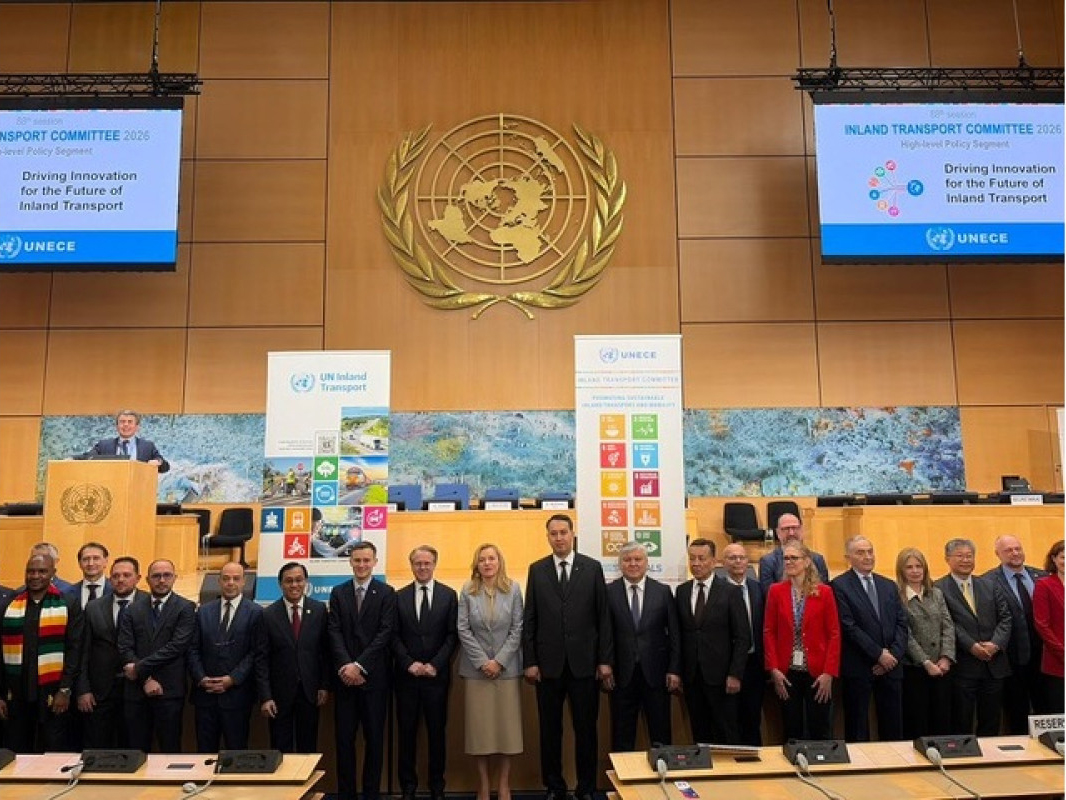
The delegation of Turkmenistan participates in the 88th session of the UNECE Inland Transport Committee

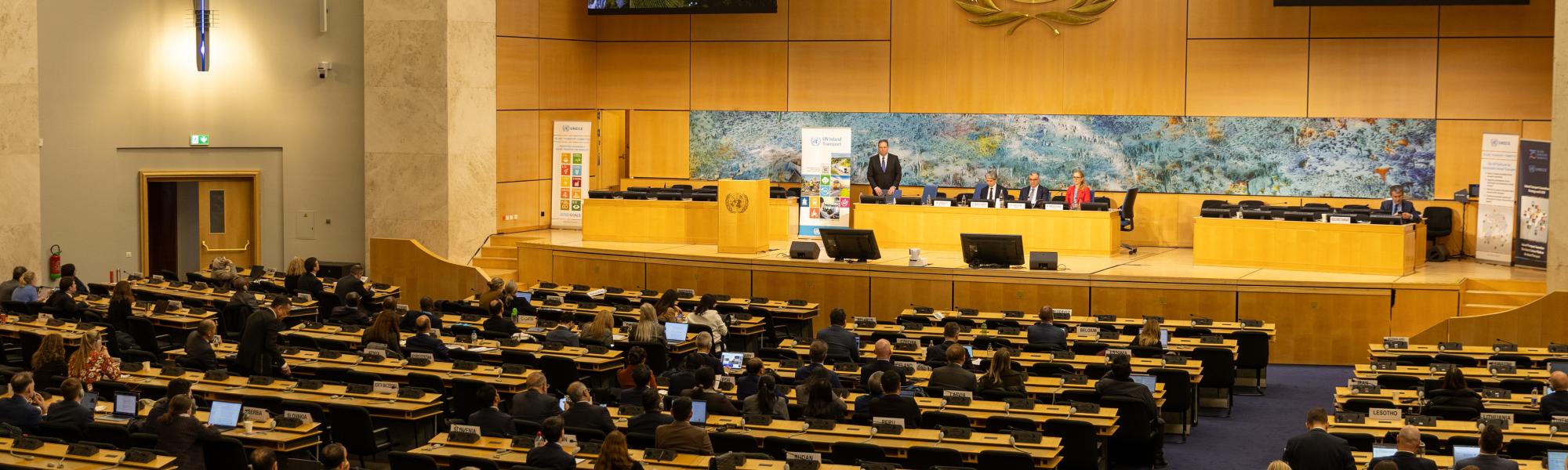
On 17 February 2026, the 88th session of the Inland Transport Committee (ITC) of the United Nations Economic Commission for Europe (UNECE) commenced its work in Geneva. The Committee is one of the key international platforms for the development of transport and transport policy.

The current 88th session of the ITC brings together heads of transport authorities of Member States, leaders of international organizations, representatives of relevant institutions, the transport business community, and experts. The event is attended by the delegation of Turkmenistan headed by Deputy Chairman of the Cabinet of Ministers B. Annayev.

Priority agenda items include the automation of transport operations, digitalization of infrastructure, development of international transport corridors, and harmonization of the regulatory and legal framework.

The session is held under the overarching theme “Advancing Innovation for the Future of Inland Transport” and focuses on innovation, automation, digitalization, infrastructure development, and enhancing the resilience of international transport systems.

Within the framework of the High-Level Segment, ministerial panel discussions were held on the implementation of intelligent transport solutions, digital connectivity, and strengthening transport links in support of sustainable trade.

In his address during the High-Level Segment, the head of the Turkmen delegation emphasized that Turkmenistan regards the digital transformation of the transport sector as a strategic priority of state policy. Particular attention was paid to the systematic modernization of the regulatory framework in the field of electronic document management, the introduction of intergovernmental data exchange mechanisms, and the development of digital transport corridors along the North-South and East-West routes.

Special note was also made of the practical cooperation with UNECE, including in the digital transformation of multimodal transport and the development of automated data exchange systems.

The statement underscored the alignment of national initiatives with the global sustainable development agenda, including the Decade of Sustainable Transport 2026-2035 proclaimed at the initiative of Turkmenistan.

The session will continue until 20 February 2026.

Source

TIR innovations on the table at talks with IRU in Geneva

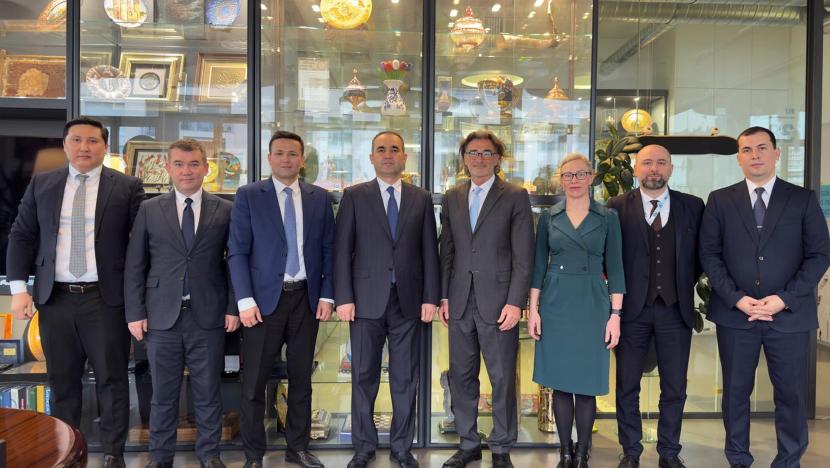
International organisation and customs chiefs, along with national authorities, met with IRU in Geneva this week to discuss transit measures and digitalisation.

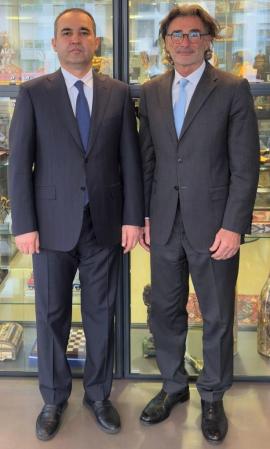
IRU Secretary General Umberto de Pretto has held a series of bilateral meetings with Akmalhoja Mavlonov, the Chairman of Uzbekistan’s Customs Committee, Kubanychbek Omuraliev, the Secretary General of the Organization of Turkic States (OTS), and representatives from the General Administration of Customs of the People’s Republic of China (GACC) and China’s Ministry of Transport.

Umberto de Pretto and Uzbekistan’s chief of customs discussed the implementation of transit procedures for high-value goods via Uzbekistan under the TIR system. This follows China’s recent expansion of TIR’s range of operations to include bonded cargo and all types of e-commerce commodities.

Following this development, GACC opened more than 200 new customs offices for TIR transport in China, mainly located in bonded customs zones and e-commerce distribution centres.

Uzbekistan’s chief of customs also informed IRU of a recent presidential decree requiring the full operationalisation of SafeTIR (an IRU customs control system for the management of TIR carnets) and TIR-EPD (TIR’s advance cargo information system). These measures are to ensure that all available security mechanisms are in place and fully used for further facilitation of transit.

OTS aims to have eTIR launched in the region by the end of the year and asked IRU to participate in a conference with the public and private sectors to accelerate its rollout.

The IRU-OTS bilateral followed an OTS customs meeting the day prior focused on border crossing facilitation through TIR Green Lanes; hubs supporting secure trade with TIR; the importance of building alternative routes connecting landlocked countries to ports; and digitalisation, including through eTIReCMR and AI solutions.

At the customs meeting, IRU presented the latest status of eTIR across OTS countries. IRU also requested the support of OTS in engaging with the region’s neighbouring countries located along key regional corridors on implementing eTIR, notably with Iran, Georgia and Tajikistan.

Together with UNECE, IRU called on OTS customs to finalise the technical implementation of eTIR without delay and operationalise eTIR in the first half of 2026 along the Türkiye–Georgia–Azerbaijan–Central Asia corridor.

Source